


Is your sewing machine skipping stitches? Relax, it’s not a sign that you need to replace your machine and it’s usually simple to fix. A skipped stitch usually occurs when your machine fails to form a proper stitch and gaps are left in the seam. You may notice missed stitches, uneven stitching or every other stitch may be skipped. So, here we’ll explain how to identify the cause, and fix it to get your sewing machine running smoothly again.
(And if you feel like you need to take better care of your baby, you should definitely check out our review of the 6 best sewing machine cases)
For newbies, it’s an easy assumption to think that all sewing machine needles are the same. But, there are significant variances and if you select the wrong needle for the fabric there’s a greater risk of skipped stitches. Delicate fabrics tend to sew better with finer needles and a universal needle is a poor choice if you want to sew stretchy fabrics. Here are four tips on how to match your needle to the fabric you’re working with:
In many cases, when a sewing machine is skipping stitches on particular fabrics, switching to an appropriate needle will instantly solve the problem.
Even if the needle looks intact, it may be damaged. Sewing through multiple layers, thick fabric and hitting pins can bend or dull it. When the needle is damaged, it will struggle to catch the thread properly and this will lead to missed stitches.
You may notice snagging fabric or hear a popping sound as you’re stitching which are sure signs that a replacement is required.
This is a simple fix, just be sure to insert the needle fully and ensure that it’s facing in the correct direction in accordance with your sewing machine manual. A good rule of thumb is to replace the needle with a fresh one after every 8–10 hours of sewing time.
Our guide to the 8 best needles we found on the market might be useful to you!
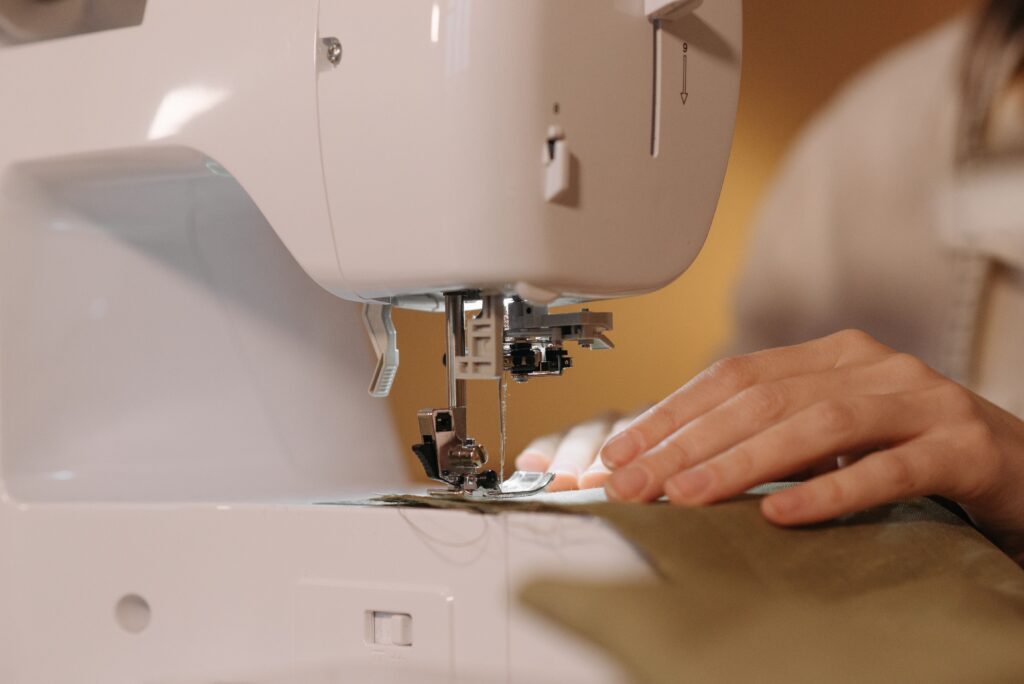
Even an experienced sewist can miss a thread guide or accidentally thread their machine when the presser foot is down. If the threading is not correct, the tension is uneven which can lead to messy seams and skipped stitches.
At this point, stop and completely rethread the sewing machine as follows:
Taking a pause and rethreading can fix a surprising number of common sewing machine issues.
For a detailed step-by-step, we wrote an article on how to thread a needle for a sewing machine
With a sewing machine skipping stitches, chances are it’s because it has not been serviced for months or years, it may require some general maintenance. The gradual buildup of dried oil, dirt and grime and worn parts may affect the stitch quality. If you use your machine often, it’s a great idea to invest in annual servicing. Cleaning lint after projects, choosing quality thread and regularly changing the needle are proven strategies to reduce the risk of stitch problems. With the correct setup and regular maintenance, your sewing machine should be making smooth, even stitches in next to no time.